The Employment Leave Act 2026 received Royal Assent on 6 August 2026, replacing the Holidays Act 2003 with a new framework for employment leave.
Most provisions come into force on 6 August 2028, giving employers a two-year transition period to prepare their people, payroll systems, data, policies and processes.


The question for most employers is not what the Act says. It is which of its provisions materially affect their workforce, their agreements, their data and their systems, and in what order those need to be addressed.
PPS is working through the Act provision by provision and publishing as we go. Each session takes one area in depth rather than covering everything at a surface level.
Ongoing sessions and commentary on how each part of the Act plays out in practice.
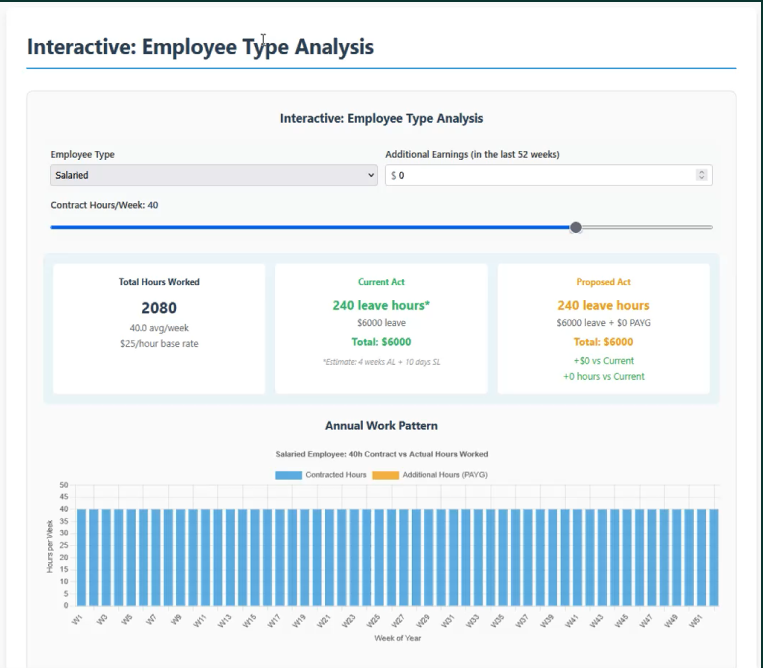
Request Access to the PPSL Dynamic Data Tool
THE PPS EMPLOYMENT LEAVE READINESS FRAMEWORK
PPS helps organisations prepare in a way that is evidence-based, practical and sustainable.
This is a structured six-stage approach to moving from uncertainty to implementation assurance.
STEP 1
Understand the legislative changes, establish governance and identify the stakeholders, systems and workforce groups affected.
STEP 2
Assess current payroll practices, employment agreements, policies, workforce data, systems, processes and potential areas of risk.
STEP 3
Translate legislative requirements and business decisions into future-state payroll rules, policies, processes, system requirements and controls.
STEP 4
Cleanse data, resolve policy and agreement questions, document decisions, engage technology providers and prepare implementation plans.
STEP 5
Validate calculations, integrations and end-to-end processes using representative employee scenarios, parallel payrolls and reconciliation.
STEP 6
Independently confirm that the implemented solution, controls and payroll outcomes operate as intended before and after go-live.
.png)
The choice of leading employers in Aotearoa